Sunday, September 14, 2014

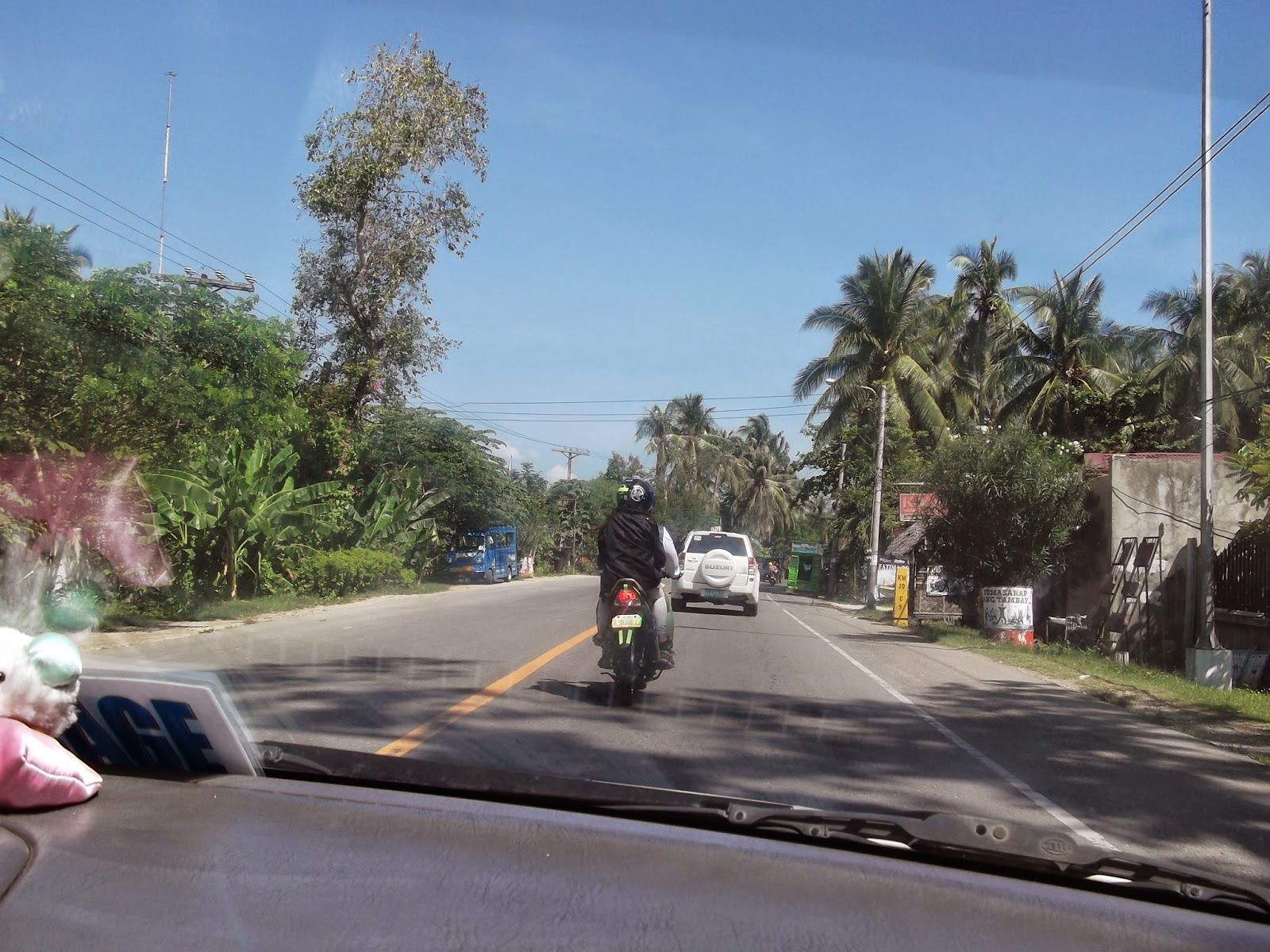
Scenes From Our North Road Trip Last Summer 2014

Now that it has been raining almost everyday all week long, the gloomy days made me long for those long hot summer days. Below is a recollection of the North Road trip we took last March...


We went to Alegre Beach Resort.  That is the only resort in Sogod, Cebu. Although Bantayan Island in the northernmost tip of Cebu is famous for its beautiful beaches, we chose Alegre because Sogod is nearer.  It takes only about 2 hours from the city proper. Bantayan takes about 3 hours by bus and another hour by boat. We opted for Day Tour which cost 1500 Php per person, part of which is consumable in terms of food. There were not much people that day, so it feels like we own the beach and the pool. It was worth the trip and the cost... 


We were pushing north I think towards Compostela 

This is still a part of Liloan

Liloan Church

Ruins of a building in Danao

Catmon

Catmon still...

Alegre Beach Resort in Sogod

Another view of the beach from the restaurant

Fine white sands, light blue sea... and a solitary figure

I could gaze at the beauty endlessly...

There was a crab playing...

View of the pool and the beach from the Reception Area of Alegre

Going home this time...


Back to reality

Tuesday, September 09, 2014

1730 Jesuit House

Destination No. 3:  1730 Jesuit House

Because it was already running late in the afternoon, and it will be getting dark soon, we hurried to our last stop - the Jesuit House.  It could be overlooked because it lies unobtrusive within a warehouse.  There is an entrance fee of 50Php per adult.


Our first stop were the rooms of memorabilia.  It was dark inside and there was an old musty smell that pervaded the rooms,  giving credence to its antiquity. 


Diorama of the old Pari-an


Exhibits of old photographs depicting historical events

I think this is a miniature replica of an old Chinese trading ship

A miniature replica of an old Spanish galleon

Upstairs was where the previous owners lived. Actually there is nothing much to see anymore. It is basically bare. I was not quite impressed, except for the fact about its age. The house has an interesting history as it changed hands with different owners.  According to our guide, the present owner is mulling on some restoration projects, probably since the house has attracted a lot of visitors.  I hope this will be fulfilled.  It is sad to see a historical piece pass into oblivion...


Saturday, September 06, 2014

Yap-Sandiego Ancestral House (Cebu City)

Destination No. 2:  Yap-Sandiego Ancestral House


Just a few steps across the Heritage of Cebu Monument is the ancestral home of the Yap-Sandiego's. When I was very young and used to pass this house, I remembered it really looked old and neglected, and rented to some family. But somebody must have told the Sandiego's that this old house has a historical value, and that prompted them to take it back and converted it to a museum. Entrance Fee: Adults 50Php (Philippine Pesos)

You can see it immediately because of the signs...


The house was given a stamp by the Tourism Commission as a  Tourist site...
The sofa of the olden days were made of sturdy wood with detailed carvings...

One of the original posts that support the second floor...

We couldn't help but tried on some of the visitors chairs from the past...

The china cabinets, the tables, the chairs - were really old... and I am glad they were not refurbished to look new.
Kitchens in the olden times were normally separated from the house because people used to cook using firewood...

The second floor has a formal dining room, which is spacious and airy because of the huge windows...


Some beautiful antique collections here below... 

The sala or the living room has huge windows...

This ancestral house must belong to an affluent family in the past, because ordinary folks lived in simple nipa huts, but this house is grand in comparison.

My sister could not help but want to sit in a rocking chair beside the window...

In the olden times, water source is from the well... theirs did not dry up even after all these years, although according to the caretakers, they used it now merely to water the gardens.

This is actually the dining room here below, that overlooks the garden...


I think, what makes the Yap-Sandiego Ancestral House interesting is that it remains sturdy and livable after all these years inspite of the fact that nothing much has changed with its basic structure.  I like it also that it was not painted or polished to look new.  For me the aged look actually gave it character and a certain kind of charm, plus the fact that all the things inside the house are ancient looking and did not deviate from its theme.  This is in fact a good study for students of History and Architecture - a look into how we live in the past.

Heritage of Cebu Monument

After the Davao trip, my sister and I were still in a travel mode and were dreaming once again on embarking on a new trip.  Unfortunately a lot of things were not in our favor. There was the weather. It rained daily, creating a somber mood with all the dark skies and the torrential rains. And worst of all, we were short of budget. And so, we decided to just go on some local tourist destinations. 

Destination No. 1:  Heritage of Cebu Monument

If you are a first time visitor in Cebu, you won't need to spend anything to see this.  It is free of charge.  And because Cebu is small, you can always take a taxi to bring you there.  It is near Sandiego-Yap Ancestral House, 1730 Jesuit House, and a little farther is Casa Gorordo. All walking distances from each other.


Because I am not a history expert, I would like to borrow an official description and share it.  Hopefully this will explain the monument.

"It is located in an area called Pari-an. The Heritage of Cebu Monument showcases the significant and symbolic events in the history of Cebu from the time of Rajah Humabon to the recent beatification of Cebuano martyr Pedro Calungsod. 


The construction of the Heritage of Cebu Monument began in July 1997 and was only inaugurated on December 8, 2000. It was designed and conceptualized by the multi-awarded sculptor and Cebu’s pride, Eduardo Castrillo. The combined cement, iron, and steel of the gigantic monolith depicts the different significant moments in Cebu’s history.

Detailed statues that are part of the monument represents the memorable fight of April 21, 1521 in the island of Mactan where native chieftain Lapu-Lapu defeated Portuguese explorer Ferdinand Magellan. Other sculptures show the local revolutions against the Spaniards. There are also those that portray the conversion to Christianity of Rajah Humabon and his followers, and the Cebuano veneration of Sto. Niño.
Other meaningful structures found in Cebu carved in the monument include a huge Spanish Galleon, the famous Basilica del Santo Niño, the Cebu Metropolitan Cathedral, the San Juan Bautista Parish Church, and the Magellan’s Cross."

My personal contribution:

I wish the the Tourism or Historical commission will exert efforts to take care of this monument, regardless if there are tourists or none, because it is beautiful, and a source of pride. And Cebuanos will be sad to see it go to waste due to neglect.